Find a Font With a Picture: The Smarter Way to Identify Fonts
Find a font with a picture instantly using AI image recognition. Upload any image and identify fonts without guessing.
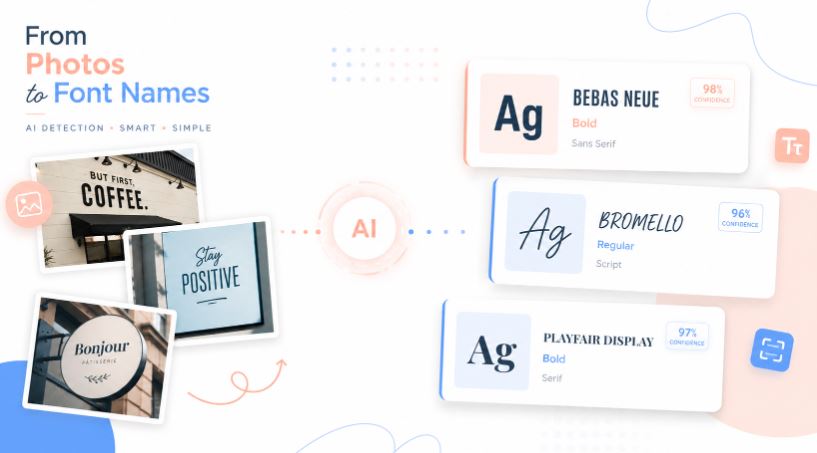
If you want to find a font with a picture, the fastest method is to upload the image into an AI-powered font recognition tool like Find Font AI. The system scans the lettering, analyzes shapes, spacing, and typography patterns, then matches the closest font in seconds.
It removes the guesswork from font identification, especially when the original font name is unknown.
There is a strangely specific frustration that designers, marketers, and even casual internet users all seem to share.
You see a font somewhere, maybe on a movie poster, a café sign, a luxury skincare label, or an old screenshot buried in your camera roll, and suddenly your brain refuses to let it go.
Not because it is important.
Because it feels unfinished.
You start zooming into pixels like a detective in a low-budget crime show. You search “bold elegant serif font.” Then “modern luxury typography.” Then “fonts that look like Vogue but softer.” Hours disappear. Nothing matches.
The weird part is that fonts carry emotion before they carry words. A typeface can make something feel expensive, nostalgic, futuristic, chaotic, trustworthy, or strangely comforting before you even read the sentence itself.
That is exactly why people search for ways to find a font with a picture.
Not everyone knows typography terminology. Most people cannot identify fonts by name. They only know how something felt when they saw it.
And honestly, that changes everything.
Instead of forcing users to describe a font they cannot explain, tools like Find Font AI reverse the process. You upload the image first. The system does the visual interpretation for you.
It feels less like searching.
More like recognition.
Why People Need to Find a Font With a Picture
Sometimes the problem is practical.
A business owner wants to recreate branding from an old banner. A YouTuber wants consistent thumbnail typography. A designer inherits a client file with missing font information. Someone restoring vintage packaging wants the closest modern equivalent.
But often, the motivation is emotional.
Typography sticks to memory in subtle ways. Certain fonts remind people of old magazines, childhood books, retro advertisements, or specific internet eras. Humans remember visual rhythm even when they forget names.
That is why visual font identification has become more important than text-based searching.
Typing “clean handwritten font” into a search bar produces endless noise. Uploading the actual image gives context immediately.
According to Find Font AI, image-based font recognition works by analyzing letter structure, spacing, curvature, stroke contrast, and visual patterns from uploaded images.
That process sounds technical. But the experience feels surprisingly human.
You show the tool what you saw.
It helps you recognize it.
How AI Font Recognition Actually Works
Most people imagine font recognition as a simple visual search.
It is more layered than that.
When you upload an image into Find Font AI, the system does not just “look” at words the way humans do. It breaks typography into measurable structures.
Character Shape Analysis
Every font has microscopic personality traits.
Some letters have sharp terminals. Others curve softly. Some fonts compress spacing aggressively. Others breathe with wide kerning.
The AI examines:
- Letter proportions
- Stroke thickness
- Edge curvature
- Baseline alignment
- Character spacing
- Serif and sans-serif structures
A lowercase “a” alone can eliminate thousands of font possibilities.
That sounds excessive until you realize humans subconsciously notice these differences too.
Typography is visual fingerprinting.
Image Cleanup Before Detection
Real-world images are messy.
Fonts are rarely captured perfectly. Screenshots blur. Posters bend. Lighting changes contrast. Old images become grainy.
Modern font recognition tools compensate for this by isolating text from the surrounding image before analysis begins.
That preprocessing stage matters more than people think.
A clean extraction often determines whether the result feels accurate or completely random.
Pattern Matching Across Font Libraries
After analyzing the typography structure, the AI compares the detected patterns against a massive font database.
Not every match is exact.
And that is important to understand.
Sometimes the goal is not perfect identification. Sometimes the closest stylistic match is more valuable than the original font itself.
Designers often discover better alternatives during the process.
Accidents become inspiration.
The Hidden Problem With Manual Font Searching
Before AI-based tools became practical, finding fonts was painfully inefficient.
People relied on:
- Font forums
- Typography subreddits
- Reverse image searches
- Guesswork
- Endless font marketplace browsing
The process felt oddly social and deeply unreliable at the same time.
Someone would upload a blurry logo and strangers would argue for six hours about whether the font was Helvetica Neue, Arial, or “probably custom.”
And honestly, they were often wrong.
The issue is that human memory for fonts is emotional, not technical.
Most users do not remember names. They remember the atmosphere.
A font felt cinematic. Minimal. Loud. Elegant. Cheap. Corporate. Soft.
That is difficult to search manually.
Uploading an image bypasses the language problem completely.
What Makes a Good Image for Font Detection
Ironically, users often think the AI failed when the real issue is image quality.
The clearer the text, the better the recognition.
Best Practices for Accurate Results
Use High-Contrast Images
Dark text on light backgrounds works best.
Low contrast makes letter extraction harder, especially for thin fonts.
Avoid Extreme Angles
Perspective distortion changes character shapes.
A straight-on screenshot almost always performs better than a tilted photograph.
Crop Unnecessary Elements
Removing clutter helps the AI focus on typography instead of unrelated visual information.
Less noise means stronger matches.
Larger Text Improves Accuracy
Tiny text creates ambiguity.
Fonts become easier to identify when multiple clear characters are visible.
This is especially true for decorative typefaces.
Why Designers Are Quietly Using AI Font Detection More Than Ever
There is an interesting contradiction happening in design culture.
Typography has become more important while font identification has become less manual.
Modern branding relies heavily on distinct typography because audiences consume visuals faster than ever. Social media compressed attention spans into milliseconds.
Fonts now communicate identity almost instantly.
At the same time, creative workflows became faster and more chaotic. Designers move between screenshots, inspiration boards, TikTok clips, packaging references, and archived visuals constantly.
Nobody wants to manually identify fonts anymore.
The expectation has shifted.
People now expect visual recognition tools to handle the technical layer automatically.
According to Find Font AI, AI-powered image recognition dramatically reduces the time required to identify typography from visual references.
That speed changes creative momentum.
Ideas stop dying during research.
Common Situations Where People Find a Font With a Picture
Recreating Old Branding
Businesses frequently lose original design assets over time.
An uploaded image becomes the only remaining reference point.
Identifying Fonts From Social Media
Instagram posts, Pinterest graphics, YouTube thumbnails, and TikTok captions constantly introduce unfamiliar typography trends.
People screenshot first. Identify later.
Matching Fonts for Consistency
Content creators often want visual consistency across platforms.
Finding the exact or closest matching font helps maintain brand identity.
Discovering Similar Fonts
Sometimes users do not even want the exact font.
They want the vibe.
That sounds subjective because it is.
But visual AI systems increasingly understand stylistic similarity beyond exact matches.
The Psychology Behind Why Fonts Matter So Much
Typography affects trust more than most people realize.
A financial company using playful bubble lettering feels unstable. A luxury brand using default system fonts feels forgettable. A restaurant menu with chaotic typography subtly changes appetite perception.
Fonts shape emotional interpretation before conscious thought catches up.
That is why identifying the right typeface matters.
Not because typography is decorative.
Because typography changes meaning.
A sentence written in one font can feel warm. In another, threatening.
Same words. Different emotional architecture.
This explains why users obsess over finding specific fonts from images. They are not chasing letters.
They are chasing feeling.
AI Recognition vs Human Typography Expertise

There is an ongoing debate inside design communities.
Can AI truly replace typography expertise?
Not completely.
And honestly, it probably should not.
Experienced typographers understand historical context, cultural associations, spacing behavior, readability psychology, and branding nuance in ways automation still struggles to replicate.
But AI excels at pattern recognition speed.
The relationship is becoming collaborative rather than competitive.
Humans provide interpretation.
AI provides detection.
That balance feels healthier than the usual “technology replacing creativity” narrative.
Comparison: Traditional Font Search vs AI Image Detection
| Method | Speed | Accuracy | Ease of Use | Requires Font Knowledge |
| Manual Font Search | Slow | Low to Medium | Difficult | Yes |
| Font Forums | Medium | Inconsistent | Moderate | Sometimes |
| Visual Guessing | Very Slow | Low | Frustrating | Yes |
| AI Image Upload Tools | Fast | High | Very Easy | No |
The biggest shift is accessibility.
You no longer need typography vocabulary to identify typography.
That barrier quietly disappeared.
Why Find Font AI Feels Different
Many font tools focus entirely on technical output.
But the real pain point is uncertainty.
Users are rarely confident when searching for fonts manually. They feel stuck between vague descriptions and endless possibilities.
Find Font AI simplifies that emotional friction by centering the process around images instead of terminology.
You do not need to know whether a font is geometric, neo-grotesque, transitional serif, or humanist sans.
You only need the picture.
That changes the experience from intimidating to intuitive.
And honestly, that matters more than people admit.
The Future of Finding Fonts From Images
This technology is evolving quickly.
Font recognition is beginning to overlap with broader visual intelligence systems capable of understanding design style, brand identity, layout aesthetics, and creative intent.
Eventually, tools may not only identify fonts but explain why they create specific emotional responses.
That sounds futuristic until you realize recommendation algorithms already predict music taste, shopping behavior, and visual preferences surprisingly well.
Typography is likely next.
The internet itself is becoming increasingly visual-first.
People search with screenshots now.
Images became language.
FAQ About Finding a Font With a Picture
Can I find a font with a picture from my phone?
Yes. Most modern font recognition tools, including Find Font AI, work directly from mobile browsers. You can upload screenshots or photos instantly.
Does AI identify fonts exactly?
Sometimes. But not always. If the exact font is unavailable, the tool usually provides visually similar matches.
What image format works best?
PNG and JPG files typically work best because they preserve readable text clarity.
Can handwritten fonts be detected?
Yes, although decorative or heavily stylized handwritten fonts may produce broader match suggestions rather than exact results.
Why does image quality matter so much?
Blurry or distorted text changes character structure, making accurate font recognition significantly harder.
Key Takings
- Finding a font with a picture removes the need for typography expertise.
- AI font recognition works by analyzing letter structure and visual patterns.
- Clear, high-contrast images dramatically improve font detection accuracy.
- Typography influences emotion, trust, branding, and visual memory.
- Find Font AI simplifies font identification through image uploads instead of manual searching.
- Designers increasingly rely on AI-assisted typography recognition for faster workflows.
- Visual search is becoming the future of creative discovery online.